Income tax and National Insurance
When you receive a payslip from your job, you’ll notice that the amount paid into your bank account is often lower than your stated salary. This is because certain deductions are taken before you’re paid, most commonly income tax and National Insurance. These deductions are a normal part of the UK pay system and are calculated based on how much you earn. Understanding what they are and why they appear on your payslip helps make sense of where your earnings go and how take-home pay is worked out.
This page provides general financial information for educational purposes only, not personalised advice.
The content on this website reflects financial rules and systems in England and may differ in other parts of the UK.
What is income tax
Income tax is a tax paid on money you earn, in the UK, this usually applies to income from employment , such as wages, salary, pensions, or even certain benefits. For most employees, income tax is automatically deducted before the money goes into their bank account.
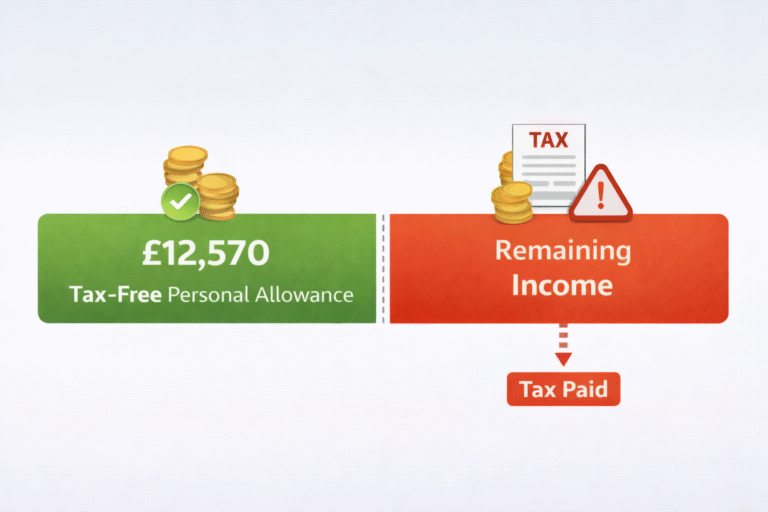
Income tax is primarily based on how much you earn over a tax year. Not all income is taxed in the same way, and most people are allowed to earn a certain amount before income tax applies. Once earnings go beyond that amount income tax then gets applied to the remaining income. An example of this is shown below:
If you earn £12570 (as of 2025) or less, you pay no tax on that at all, this is called your personal allowance. However, once your income goes beyond that point, that’s when tax gets involved. It’s only the amount of money above that threshold that becomes taxable.
Income tax gets collected gradually throughout the year, rather than in one go. The exact amount can vary depending on income earned, ensuring contributions reflect on an individuals level of income.
What is National Insurance
National insurance is a contribution paid on earnings in the UK and is separate from income tax. While it also appears as a deduction on your payslip, National Insurance is designed specifically to help fund certain state benefits and entitlements. Like income tax, it’s usually deducted automatically from your pay if you’re employed.
National Insurance is based on how much you earn as well as employment status. Most people pay National Insurance when their earnings go above a certain amount, like Income tax, and the amount paid generally increases as income increases too. These contributions made are recorded under your own name and count towards eligibility for benefits such as the state pension.
The eligibility for benefits are increased depending on the contribution records , meaning that paying these over time will help boost the chances for entitlement, even when they’re collected regularly alongside wages and salaries. In the wider tax system the National Insurance contributions serves a very different purpose compared to Income tax, despite looking similar on your payslip.
Why are there deductions
| What Income Tax Contributes To | What National Insurance Contributes To |
|---|---|
| Schools and education funding | State Pension entitlement |
| Hospitals and healthcare services | Parts of NHS funding |
| Transport and national infrastructure | Contribution-based Jobseeker’s Allowance |
| Local councils and public services | Contribution-based Employment and Support Allowance |
| Police, fire, and emergency services | Maternity Allowance |
| Defence and national security | Bereavement benefits |
| Welfare and social support programmes | National Insurance contribution records |
| General government spending | Eligibility for certain state benefits |
While both Income tax and National Insurance get taken off of your payslip, they serve different roles.
Income tax is paid into the governments general budget and is used to fund a variety of public services and national spending priorities.
National Insurance – is more linked to state benefits, the main one that most people recognise being the state pension. These payments help go towards a general safety net for life’s uncertainties.
Calculating tax
Income tax
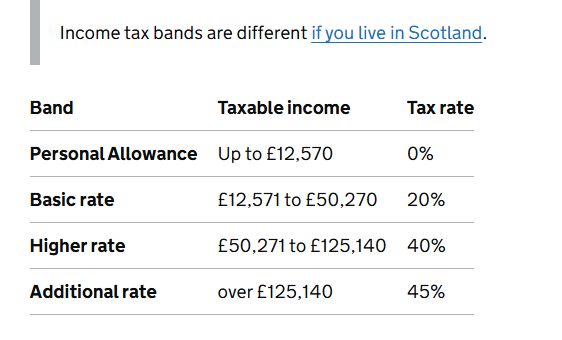
Income tax is worked out based on how much you earn over the tax year, starting with the personal allowance, for most people this is £12,570, meaning you earn up to this amount before paying any tax. Once above this amount, you get taxed in stages, also known as tax bands. Income between £12,571-£50,270 falls into the basic rate band, and is taxed at 20%. For example, earning £20,000 a year would result in £7,429 being taxed at 20%. The next band would be at income between £50,271-£12,5140 which gets taxed at 40%, then income over £12,5140 is taxed at 45%. It’s important to remember the money being taxed in the band applies to that specific rate, for example income earned over the £50,271 is taxed at 40%, not all of your income.
National Insurance
National Insurance is taken from your pay based on how much you earn in each pay period, not on total income for the year. Depending on how often you get paid at work, this could be calculated monthly or weekly. National Insurance starts getting paid at a lower earnings level, once your pay goes above this level , National Insurance gets charged at a main rate on the part of your income above that threshold. At higher levels, the paid rate drops , rather than increases. For example, if you earn £2,000 a month and the threshold is £1048, the National Insurance payments are based on the £952
For those with full time employment and consistent income, tax calculations tend to be more accurate over time, as HMRC can have a better estimate of what your total earnings will be across the year, however those who work part time, or even have multiple sources of income may find themselves overpaying tax, when this happens, any extra tax paid can usually be claimed back either automatically by HMRC or by claiming it.
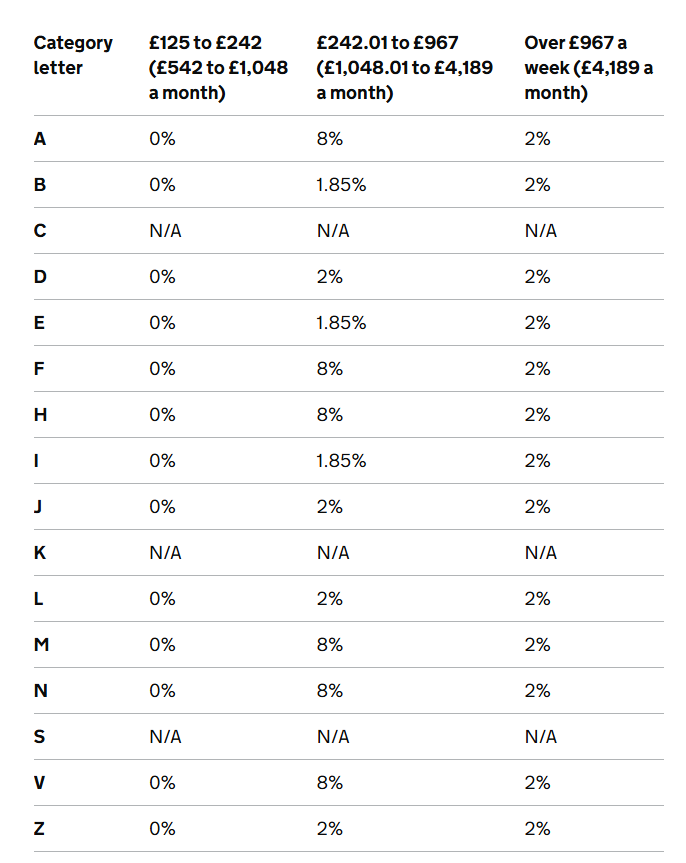
Here are examples from GOV UK displaying information relating to both income tax and National Insurance
Self employed contributions
If you are self employed, National Insurance isn’t taken automatically from your income, instead it’s calculated based on your annual profits and paid through your self assessment tax return. Unlike employees, National Insurance doesn’t have to be paid by those that are self employed, however this choice does affect future benefits, particularly eligibility for the state pension. If profits are low, some may feel the need to cut out this expense to help reduce short term costs, but it’s worth noting that long term financial support will be limited.
For the self employed, National Insurance is defiantly more flexible compared to standard employees who don’t have a choice, but this also means that there’s more responsibility that’s needed too. As the payments are not automatically deducted, it’s important for those to plan ahead and set money to one side.
In some situations, certain costs to the business can be deducted before tax is finally calculated. Business related expenses could involve any travel costs, payments for equipment, or potentially some home running costs if working from home. By including these deductions, it reduces the amount of profit that gets taxed. Overall, only expenses that are necessary for the job can usually be written off as tax deductible, and not things for everyday personal use.